Docusaurus User Guide
You have just learned the basics of Docusaurus and made some changes to the initial template.
Docusaurus has much more to offer!
Have 5 more minutes? Take a look at versioning and i18n.
Anything unclear or buggy in this tutorial? Please report it!
What's next?#
- Read the official documentation.
- Add a custom Design and Layout
- Add a search bar
- Find inspirations in the Docusaurus showcase
- Get involved in the Docusaurus Community
Create a Blog Post#
Docusaurus creates a page for each blog post, but also a blog index page, a tag system, an RSS feed...
Create your first Post#
Create a file at blog/2021-02-28-greetings.md:
A new blog post is now available at http://localhost:3000/blog/greetings.
Create a Document#
Documents are groups of pages connected through:
- a sidebar
- previous/next navigation
- versioning
Create your first Doc#
Create a markdown file at docs/intro.md:
A new document is now available at http://localhost:3000/docs/intro.
Configure the Sidebar#
Docusaurus automatically creates a sidebar from the docs folder.
Add metadatas to customize the sidebar label and position:
It is also possible to create your sidebar explicitly in sidebars.js:
Create a Page#
Add Markdown or React files to src/pages to create a standalone page:
src/pages/index.js->localhost:3000/src/pages/foo.md->localhost:3000/foosrc/pages/foo/bar.js->localhost:3000/foo/bar
Create your first React Page#
Create a file at src/pages/my-react-page.js:
A new page is now available at http://localhost:3000/my-react-page.
Create your first Markdown Page#
Create a file at src/pages/my-markdown-page.md:
A new page is now available at http://localhost:3000/my-markdown-page.
Deploy your site#
Docusaurus is a static-site-generator (also called Jamstack).
It builds your site as simple static HTML, JavaScript and CSS files.
Build your site#
Build your site for production:
The static files are generated in the build folder.
Deploy your site#
Test your production build locally:
The build folder is now served at http://localhost:3000/.
You can now deploy the build folder almost anywhere easily, for free or very small cost (read the Deployment Guide).
Manage Docs Versions#
Docusaurus can manage multiple versions of your docs.
Create a docs version#
Release a version 1.0 of your project:
The docs folder is copied into versioned_docs/version-1.0 and versions.json is created.
Your docs now have 2 versions:
1.0athttp://localhost:3000/docs/for the version 1.0 docscurrentathttp://localhost:3000/docs/next/for the upcoming, unreleased docs
Add a Version Dropdown#
To navigate seamlessly across versions, add a version dropdown.
Modify the docusaurus.config.js file:
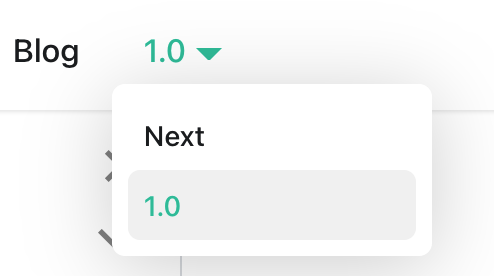
The docs version dropdown appears in your navbar:
Update an existing version#
It is possible to edit versioned docs in their respective folder:
versioned_docs/version-1.0/hello.mdupdateshttp://localhost:3000/docs/introdocs/intro.mdupdateshttp://localhost:3000/docs/next/hello
Translate your site#
Let's translate docs/intro.md to French.
Configure i18n#
Modify docusaurus.config.js to add support for the fr locale:
Translate a doc#
Copy the docs/intro.md file to the i18n/fr folder:
Translate i18n/fr/docusaurus-plugin-content-docs/current/intro.md in French.
Start your localized site#
Start your site on the French locale:
Your localized site is accessible at http://localhost:3000/fr/ and the Getting Started page is translated.
caution
In development, you can only use one locale at a same time.
Add a Locale Dropdown#
To navigate seamlessly across languages, add a locale dropdown.
Modify the docusaurus.config.js file:
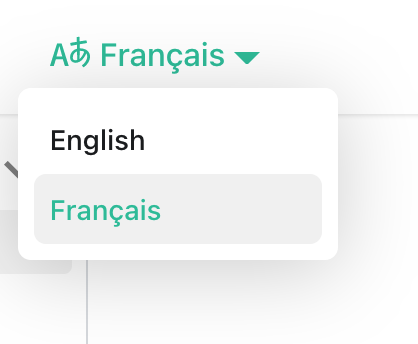
The locale dropdown now appears in your navbar:
Build your localized site#
Build your site for a specific locale:
Or build your site to include all the locales at once:
Manage Docs Versions#
Docusaurus can manage multiple versions of your docs.
Create a docs version#
Release a version 1.0 of your project:
The docs folder is copied into versioned_docs/version-1.0 and versions.json is created.
Your docs now have 2 versions:
1.0athttp://localhost:3000/docs/for the version 1.0 docscurrentathttp://localhost:3000/docs/next/for the upcoming, unreleased docs
Add a Version Dropdown#
To navigate seamlessly across versions, add a version dropdown.
Modify the docusaurus.config.js file:
The docs version dropdown appears in your navbar:
Update an existing version#
It is possible to edit versioned docs in their respective folder:
versioned_docs/version-1.0/hello.mdupdateshttp://localhost:3000/docs/introdocs/intro.mdupdateshttp://localhost:3000/docs/next/hello